
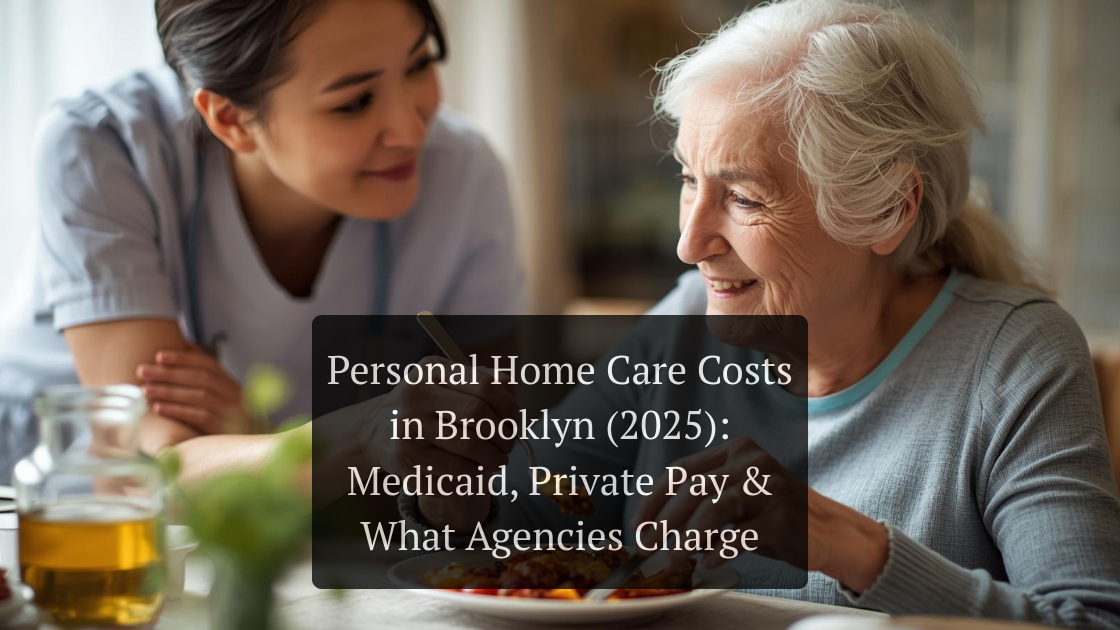
A Closer Look at Personal Home Care Costs in Brooklyn
Personal home care supports individuals with daily living tasks in their homes. As demand increases in Brooklyn, families want clear information on 2025 pricing, Medicaid options, and typical home care agency fees. This guide explains hourly rates, live-in care costs, Medicaid programs, and key pricing factors affecting Brooklyn residents.
What Personal Home Care Includes
Personal home care covers non-medical assistance with Activities of Daily Living (ADLs), such as:
- Bathing
- Dressing
- Meal preparation
- Mobility and transfer assistance
- General supervision
Attendants, such as PCAs and HHAs, provide these services.
Why Understanding Home Care Costs Matters
Brooklyn residents face rising caregiver wages and evolving Medicaid guidelines. Understanding these factors helps families:
- Build accurate care budgets
- Compare agency pricing
- Determine whether Medicaid or private pay applies.
Challenges Families Often Face
Families may experience:
- Confusion about Medicaid rules
- Limited knowledge of hourly vs. live-in pricing
- Extra fees for holidays or overnight shifts
- Differences in agency quotes
- Questions about caregiver training
How Agencies Determine Personal Home Care Costs
Assessment of Care Needs
Agencies evaluate mobility, supervision, and daily support requirements.
Schedule and Hours Required
Hourly, part-time, full-time, or live-in care options influence the final cost. More hours mean higher weekly totals.
Caregiver Certification
Rates differ depending on whether the caregiver is a PCA, HHA, or CNA.
Medicaid Eligibility Review
Programs like MLTC and CDPAP may cover approved care hours.
Learn more:
- https://health.ny.gov
- https://www.health.ny.gov/health_care/medicaid/redesign/cdpap.htm
Customized Agency Quotes
Agencies provide individualized pricing after reviewing care needs and schedules.
Comparing Brooklyn Home Care Options
Hourly Care vs. Live-In Care
- Hourly care supports flexible part-time schedules.
- Live-in care may be more cost-effective for those needing consistent supervision.
Agency Caregivers vs. Independent Caregivers
- Agencies offer reliability, training, and oversight.
- Independent caregivers may charge less but lack agency support.
Medicaid vs. Private Pay
- Medicaid covers approved hours for qualifying residents.
- Private pay applies when additional hours or specific care needs exceed Medicaid coverage.
Brooklyn Home Care Costs in 2025
Rates vary across Bed-Stuy, Bushwick, Flatbush, and Crown Heights.
2025 Cost Breakdown for Brooklyn Home Care
| Service Type | Average Cost | Notes |
| Hourly Personal Care | $28–$40 per hour | Higher for advanced or off-hour care |
| 24-Hour Split Shift | $480–$650 per day | Two caregivers working 12-hour shifts |
| Live-In Care | $330–$430 per day | Requires nighttime sleep time and space |
| Medicaid MLTC | $0 | Covers approved hours |
| CDPAP | $0 | Allows relatives to provide care |
Key Factors That Influence Pricing
- Hours required
- Complexity of care
- Mobility or memory support
- Weekend or overnight schedules
- Local caregiver wage requirements
Documentation and Resources for Planning Care
Documents Needed for Medicaid Evaluation
- Identification
- Proof of residency
- Medical documentation
- Physician assessments
- Insurance details
Important Questions for Agencies
- Are weekend or holiday rates different?
- What certifications do your caregivers hold?
- What happens if a caregiver misses a shift?
Care Comparison Checklist
- Hourly and live-in rates
- Experience and training levels
- Special care fees
- Scheduling flexibility
Common Mistakes to Avoid
- Assuming Medicaid covers unlimited hours
- Choosing caregivers solely by price
- Overlooking agency training and licensing
- Misunderstanding live-in vs. 24-hour care
- Not reviewing what services each rate includes.
Examples of Real-World Care Situations
Part-Time Support
A senior needing help with meals and dressing may benefit from hourly care.
Full-Time Dementia Support
Individuals with memory challenges may need live-in care or 24-hour monitoring.
Post-Hospital Recovery
Someone recovering from surgery may need short-term hourly support with mobility and meals.
Tips for Reducing Home Care Costs
- Request a complete care assessment.
- Inquire about long-hour or weekly rate options.
- Use Medicaid programs when eligible.
- Keep schedules consistent to avoid premium fees.
Personal Home Care in Brooklyn: Local Overview
Brooklyn wage laws and caregiver requirements influence local home care pricing. Programs like MLTC and CDPAP help residents access covered care hours.
Families can also explore services from BSHHA Home Health Care & Staffing Agency, including:
- Personal Home Care
- Home Attendant Services
- Home Health Aide Services
- Skilled Nursing Care
- Care Coordination
Internal links:
- Home Care Services in Brooklyn, NY: https://www.bshha.org
- https://www.bshha.org/personal-home-care/
Frequently Asked Questions
1. How much does personal home care cost per hour in Brooklyn?
Hourly rates typically range from $28 to $40 per hour, depending on caregiver training and the complexity of care. Rates may increase for specialized care, weekend scheduling, or evening hours. Brooklyn wage laws and staffing availability also influence costs.
2. Does Medicaid cover personal home care for Brooklyn residents?
Yes. Programs such as MLTC and CDPAP can fully cover approved personal care hours for eligible individuals. A clinical assessment of care needs determines coverage levels. Many Brooklyn families pay nothing out-of-pocket when enrolled.
3. What is the difference between live-in care and 24-hour care?
Live-in care is typically more affordable because a single caregiver provides care during scheduled sleep time. 24-hour split-shift care involves two caregivers working full shifts without sleep, making it necessary for individuals needing constant monitoring. This requirement increases the cost of 24-hour care.
4. What is the difference between home attendants and home health aides?
Home attendants assist with daily tasks like bathing and meal preparation. Home health aides (HHAs) provide the same support and may also perform simple health-related tasks, such as monitoring vital signs. HHAs typically receive additional training and can support more complex care needs.
Speak With BSHHA for Personalized Home Care Guidance
Have questions about personal home care costs or Medicaid options in Brooklyn? Our team can help you review care needs, understand pricing, and explore available programs.
Call (718) 453-8400 or use the links below to get started.
Contact BSHHA: https://www.bshha.org/contact/
Read More Home Care Guides:https://www.bshha.org/blog/